Art History: BVA312 - 26/03/2019 (Class European art and Africa)
More in depth on each work, all information from SIT Art History PowerPoint
- Saint Maurica (ca. 1520-25)
- Jan Jansz Mostaert Portrait of an African Man (ca. 1525-30)
- Juan de Pareja by Velazquez (1606-1670)-the calling of St. Matthew (1661) by Juan de Pareja
- Onyeka Nubia: Blackamoores. He studies of comparative histories and intersectionalism (Video)
- Miranda Kuafman: Black Tudors. (Video)
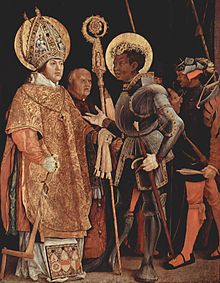

Saint Maurice (ca. 1520-25)
Lucas Cranach the Elder and Workshop
Originally
the wing of an altarpiece, this panel represents Maurice, the Roman legion
commander martyred for refusing to slaughter Christians. It was likely
commissioned by Cardinal Albrecht of Brandenburg (1490–1545), the most powerful
prelate in the Holy Roman Empire, who established the collegiate church at
Halle as a showplace for his art patronage and his collection of over 8,200
relics. Cranach’s painting reproduces one of the church’s treasures, a
life-size reliquary statue of Saint Maurice in a gold-trimmed suit of
silver armor. The collar of the Golden Fleece and the imperial eagle on
the banner are references to the reigning emperor, Charles V.
- Jan Jansz Mostaert Portrait of an African Man
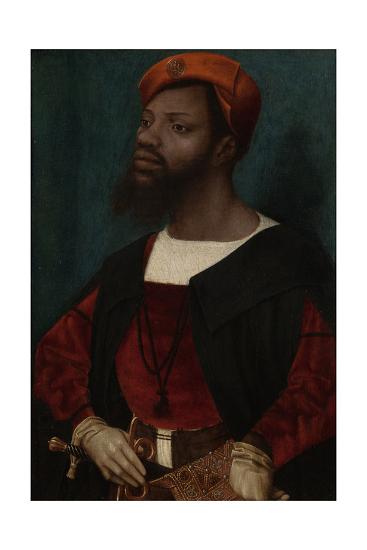
This
is the only known portrait of a black man in early European painting. He may
have served at the Brussels court of Emperor Charles V, who had a black archer
called Christophle le More among his bodyguards. The badge of the Virgin on his
cap is a souvenir of a pilgrimage to Halle (Brabant), a favourite destination
of pilgrims from the Brussels court. Rijksmuseum, Amsterdam.
Velázquez
most likely executed this portrait of his enslaved assistant in Rome during the
early months of 1650. According to one of the artist's biographers, when this
landmark of western portraiture was first put on display it "received such
universal acclaim that in the opinion of all the painters of different nations
everything else seemed like painting but this alone like truth." Months
after depicting his sitter in such a proud and confident way, Velázquez signed
a contract of manumission that would liberate him from bondage in 1654. From
that point forward, Juan de Pareja worked as an independent painter in Madrid.


Comments
Post a Comment