Studio/ Research: BVA 316 - 20/03/2019 (One-On-One)
Week Four One-On-One with Kathryn
Agenda from last week
- Clarify my aim of the story.
- What I wanted to display on the first exhibition.
- Rough sketches.
My question shifted a little after some suggestion given by Kathryn, " How by revealing my diverse cultural identity by comparing Malay, Chinese and European stories of Cinderella through drawing/ illustration can I benefits of cultural acceptance in contemporary society?"
My aim is to share that human by nature is the same, they seek acceptance in society as a sign of belonging. I have decided to produce drawing/illustration based on the story of the three versions of Cinderella from a different country, showing the similarity between these three versions of the Cinderella fairy tale.
In my first exhibition, I wanted to present 3 specific scenes from each Cinderella (Chinese, Malay, European) to show the similarity between the 3 of them.
Here are some rough sketches for my scene:
*I will create more sketches on specific scenes to show the obvious resemblance between three of them. The scene where Cinderella meets her spiritual guardian/ magical fish/fairy godmother when a negative thing happens in that certain situation.
 |
| Chinese (Ye Xian) |
 |
| Malay (Bawang Putih Bawang Merah) |
 |
| European (Cendrillon) |
My border is in the style of Art Nouveau but implies a traditional pattern from each culture.
 |
| A rough idea of how my border should look like. All symbol signifies each culture with their magical item. |
Chinese Pattern


Chinese traditional design has a history going back about 5,000 years
and follows a philosophy that is unique. In China, traditional design has a deep
connection with the past and plays a momentous role in forming the identity of
the Chinese (Sun, 2010). Exploring traditional Chinese design is an effective
way to inherit and transmit Chinese history and culture. (Page 2) The art and design
in traditional Chinese theory aim to connect symbols and meanings through
metaphors, symbolism, and association. (Page 18)
Malay Pattern

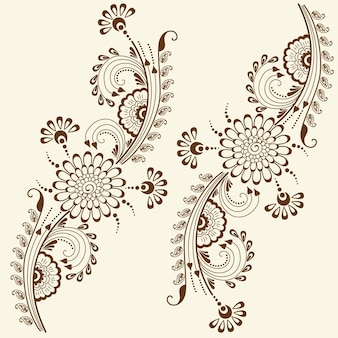
Designs are influenced by Hinduism, Buddhism, and Islam. These cultures were introduced into Malay society through these traders. As key motifs originated from Hindu-Buddhism with important symbolic meanings in their context, so
did the concept of a flower since early Malay life tradition in Malay Bunga, has been used to express
the physical beauty of a Malay young girl. This is also seen in the aesthetic use of flowering shrubs and
trees in the Malay landscape planted as decoration for the houses (Norhaiza, 2009). Apart from the
traditions of Malay life, Bunga is applied in Malay art, as the most meaningful of the motifs and patterns
depicted on carved components. Zumahiran and Ismail (2010) concurred that the most dominant motif
depicted on various carving is that of floral motifs.
European Pattern
a)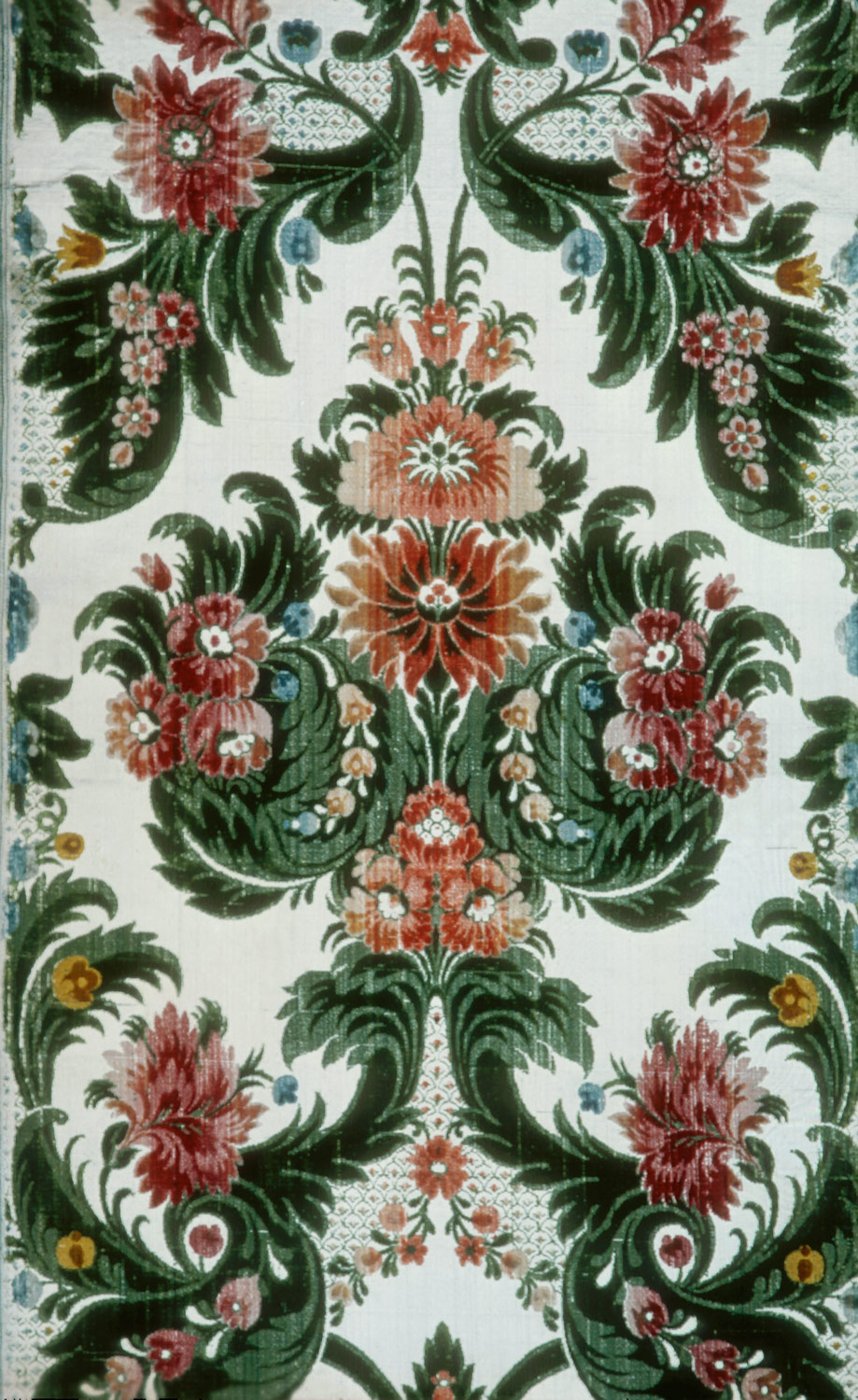 b)
b) 
b)
a) Floral velvets like this one are often referred to as jardinière velvets, using the French word for garden in reference to their bold, symmetrical floral patterns, or Genoa velvets, referring to the city where they were first produced.
b) Was a popular pattern, and in addition to the Museum's piece with a pale blue background, examples with different background colors such as red, green, and yellow exist in other museum collections in the United States and Europe.
Style: Stippling
 |
| Stippling Method |
Stippling is one of the six basic drawing techniques in which a pattern of dots of one solid color of ink, such as black, is used to create an image. ... On the contrary, pointillism is an art technique that consists of several primary colored dots overlapping or set close to each other.
Agenda for Week 5 One-On-One:
1. Findings on Artists that produce work related to Cinderella (As a reference of how they define their work)
2. Elaborate meaning of material/ method used. Example: Stippling, Ink Pen, Paper. *questioning, Why Pointillism? Why Ink?
3. Research on more theoretical materials on a cultural identity or fairy tales within the animation or diversity context. *Share animation context.


Comments
Post a Comment