Art History: BVA 312 - 26/08/2019 & 02/09/2019 (Contemporary Art: North America & South America)
Contemporary Art: North American - Canada, USA, Mexico, Central america and Caribbean Region.
Regional background :
Dukeredbird
Artist: Curtis Talwst Santiag
https://torontolife.com/culture/art/curtis-talwst-santiago-dioramas/


Bienal de arte Paiz
Arevalo and
Magdalena
https://21bienal.fundacionpaiz.org.gt/magdalena-atria-lemaitre/
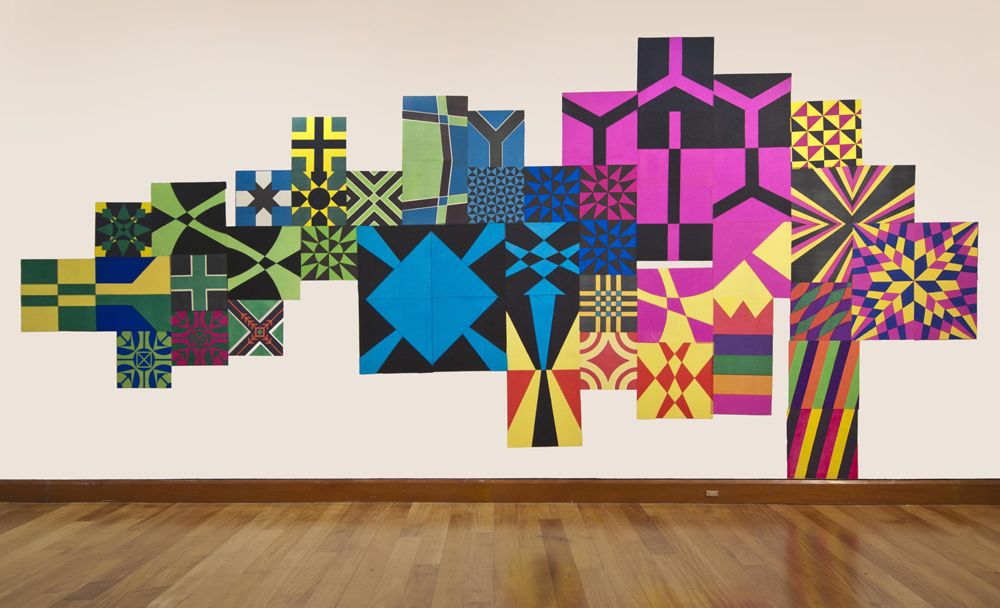
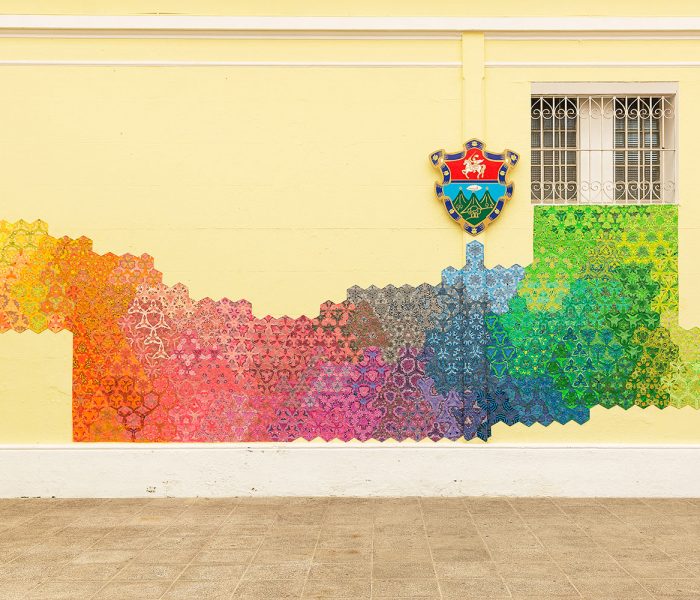
Some constants in my work are the tension between the rational and the emotional, the collective and the personal, the real and the ideal, the formal and the symbolic. I explore these notions through different mediums—painting, drawing, sculpture and photography—always with a particular emphasis on the materials and processes I utilize. These materials belong to specific uses and traditions and carry with them meanings and associations related to these origins.

Regional background :
■Nick
Sikkuark (Inuit, born in 1943, Garry
Lake, NU, Canada; died in 2013 in Kugaaruk, NU, Canada)
■Lisa
Steele (born
in Kansas City, MO, USA; lives in Toronto, ON, Canada) and Kim
Tomczak (born
in Victoria, BC, Canada; lives in Toronto, ON, Canada)
■Curtis
Talwst
Santiago (born
in Edmonton, AB, Canada; lives in Lisbon, Portugal)
Dukeredbird
Artist: Curtis Talwst Santiag
https://torontolife.com/culture/art/curtis-talwst-santiago-dioramas/
The Edmonton-born artist started his career in Toronto, creating intricate scenes in antique ring boxes. Since advising the AGO on its 2015 Jean-Michel Basquiat show, he’s taken his studio on the road to New York City, Johannesburg, Oakland and Geneva (and, right now, back to Toronto’s Cooper Cole Gallery). “I’ve just been riding this wave since the Basquiat exhibition,” he says.
Through it all, his method has stayed the same. “I use a lot of model-making materials—like straight-up hobby-shop, train-set-building materials,” he said. “I also use found objects from my travels—I collect sand, rocks, plants, pebbles, maybe hair from someone. They’re these little voodoo charms full of so many things.” Here, he explains the story behind five of his newest jewellery box sculptures, largely inspired by art history and his time in South Africa.
Bienal de arte Paiz
Arevalo and
Magdalena
https://21bienal.fundacionpaiz.org.gt/magdalena-atria-lemaitre/
Some constants in my work are the tension between the rational and the emotional, the collective and the personal, the real and the ideal, the formal and the symbolic. I explore these notions through different mediums—painting, drawing, sculpture and photography—always with a particular emphasis on the materials and processes I utilize. These materials belong to specific uses and traditions and carry with them meanings and associations related to these origins.
Mountain: Northern Territories
and Alberta (Canada), Montana, Idaho, Utah, Colorado, Arizona, and New Mexico
(USA)
Alberta:
Phoenix Arizona: http://www.phxart.org/exhibition/current
**Anchorage Musuem
■Cuba: Havana, Jamaica: Kingston, Haiti:
Port-au-Prince, Dominican Republic: Santo Domingo
https://havanatimes.org/features/whats-happening-to-cubas-controversial-law-to-control-independent-art/
Museu Nacional de Belas Artes de Cuba (without translation)
- Seems like the art happening in Cuba (Mexico) is not as popular as it is in America.
- There are no translation, only written in Mexican language.
- This museum features traditional art. Not contemporary.
Artist: Gabriel Orozco (Mexican Artist)
https://havanatimes.org/features/whats-happening-to-cubas-controversial-law-to-control-independent-art/
Similarly, the vice-minister of Culture, Fernando Rojas, claimed in a TV interview that “artistic creation and freedom are consecrated in the Republic’s Constitution” and the new constitutional project that will be put to a popular referendum vote on February 24th.
Museu Nacional de Belas Artes de Cuba (without translation)
- Seems like the art happening in Cuba (Mexico) is not as popular as it is in America.
- There are no translation, only written in Mexican language.
- This museum features traditional art. Not contemporary.
Artist: Gabriel Orozco (Mexican Artist)
■Puerto Rico: San Juan
Museum of contemporary art of puerto rico
Contrapunto (Art Musuem)
http://mac-pr.org/coleccion.html
Artists from Latin America, the Caribbean and Puerto Rico from the second half of the twentieth century to the present. The MAC Collection profile, conceptually located at the junction and ambivalence of the local and the global and of the historical and of the “newer” art, encourages the museum experience offered by our institution to be diverse and rich in content.


Museum of contemporary art of puerto rico
Contrapunto (Art Musuem)
http://mac-pr.org/coleccion.html
Artists from Latin America, the Caribbean and Puerto Rico from the second half of the twentieth century to the present. The MAC Collection profile, conceptually located at the junction and ambivalence of the local and the global and of the historical and of the “newer” art, encourages the museum experience offered by our institution to be diverse and rich in content.


Havanna Biennial
Contemporary Art Galleries of Southern America
- Museo nacional de Bellas Artes
Michelangelo Pistoletto: Venus of rags
Devoted himself to critical reflection on the media with which art constructs its various stagings. In
opting for humble materials, this conceptual tendency questioned the role that society allotted to
art making.
In this way, he links the classical concept of the sublime with ordinary life. In confronting the construction of the artistic as propounded by institutions with our day-to-dayness, Pistoletto formulates a crucial question: Where is art rooted? What decides its nature? The incorruptible beauty of classical art and the degradation of clothing through social use together take on a symbolic character: art converses with our bodies and becomes part of common felt experience. The equality among humans that animates his worldview is thereby given its due prominence.
- Julio Le Parc
his work, comprising abstraction, kinetic art, conceptualism, and op art allows the dialogue with
universal tradition to be renewed through a language that has remained true to itself for nearly six
decades.
** Manzana 1 (Erasmo Zarzuela Chami)
-Amazing art style
South America - Paraguay, Uruguay, Brazil
Paraguay: The Museo del Barro in Asuncion
all types of visual arts that highlight the cultural and ethnic diversity of Paraguay. Art Director: Lia colombino.
The museum is strongly embedded in sentiments, chance complicity and agreements and
disagreements. Another aspect has to do with a cultural resistance, ultimately leading a group of
people to create a space for themselves where they feel represented
Uruguay:
Contemporary artist: https://theculturetrip.com/south-america/uruguay/articles/these-8-contemporary-artists-from-uruguay-should-be-on-your-radar/
Contemporary art gallery: https://theculturetrip.com/south-america/uruguay/articles/montevideo-s-10-best-contemporary-art-galleries-the-rise-of-uruguayan-art/
** I can talk about which artist that talks about cultural diversity and why cultural diversity is such a big thing.
** I was thinking about the sales. Why art nowadays is so expensive. (which should I go for ??)


Comments
Post a Comment